This video is a 5-minute visual study of fashion inspired by historic desert saloon gamblers. Using AI image tools, the video explores how classic
frontier silhouettes and Old West motifs, still work for today.
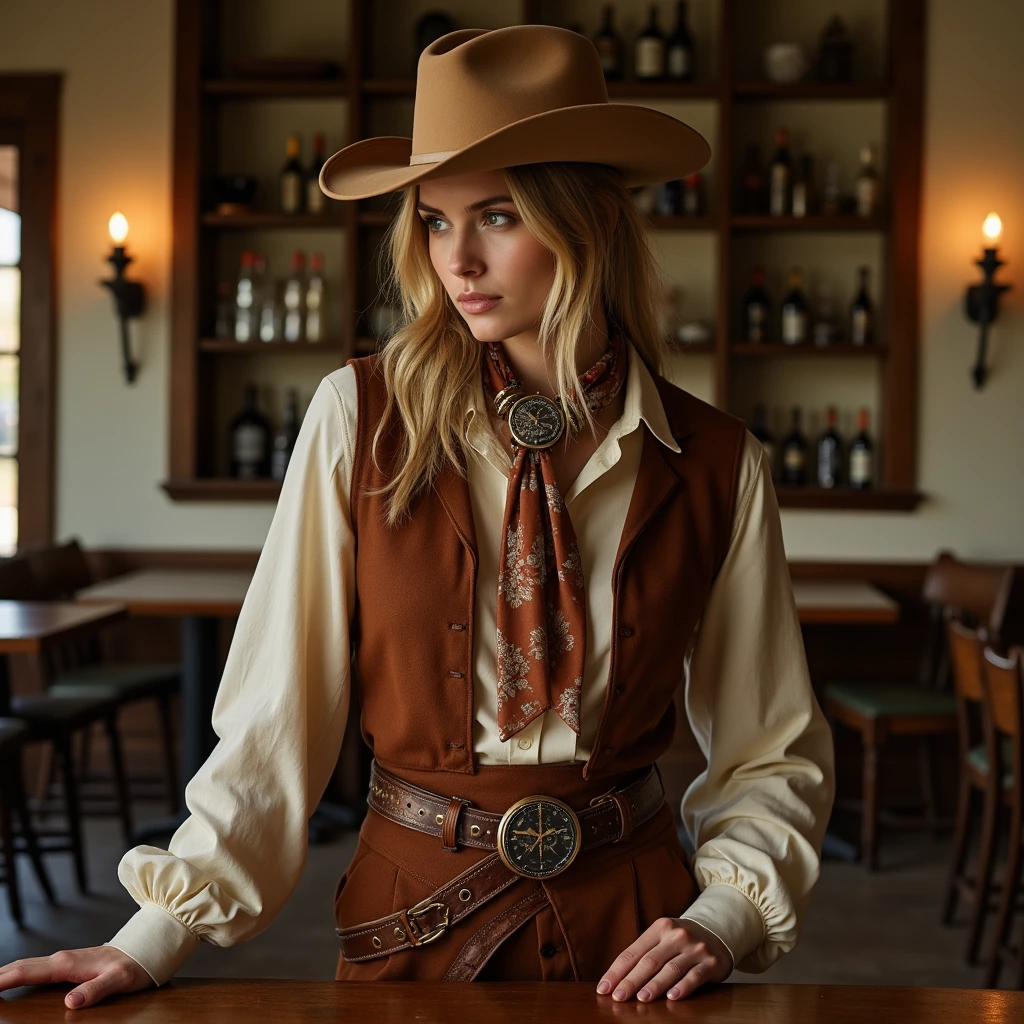
From gamblers to cowgirls in structured jackets, split riding skirts, and layered neckwear, these outfit combinations are shaped by place, climate, and a visual sense of narrative. It’s a thematic exploration into elegance and utility — remixed through the lens of design.
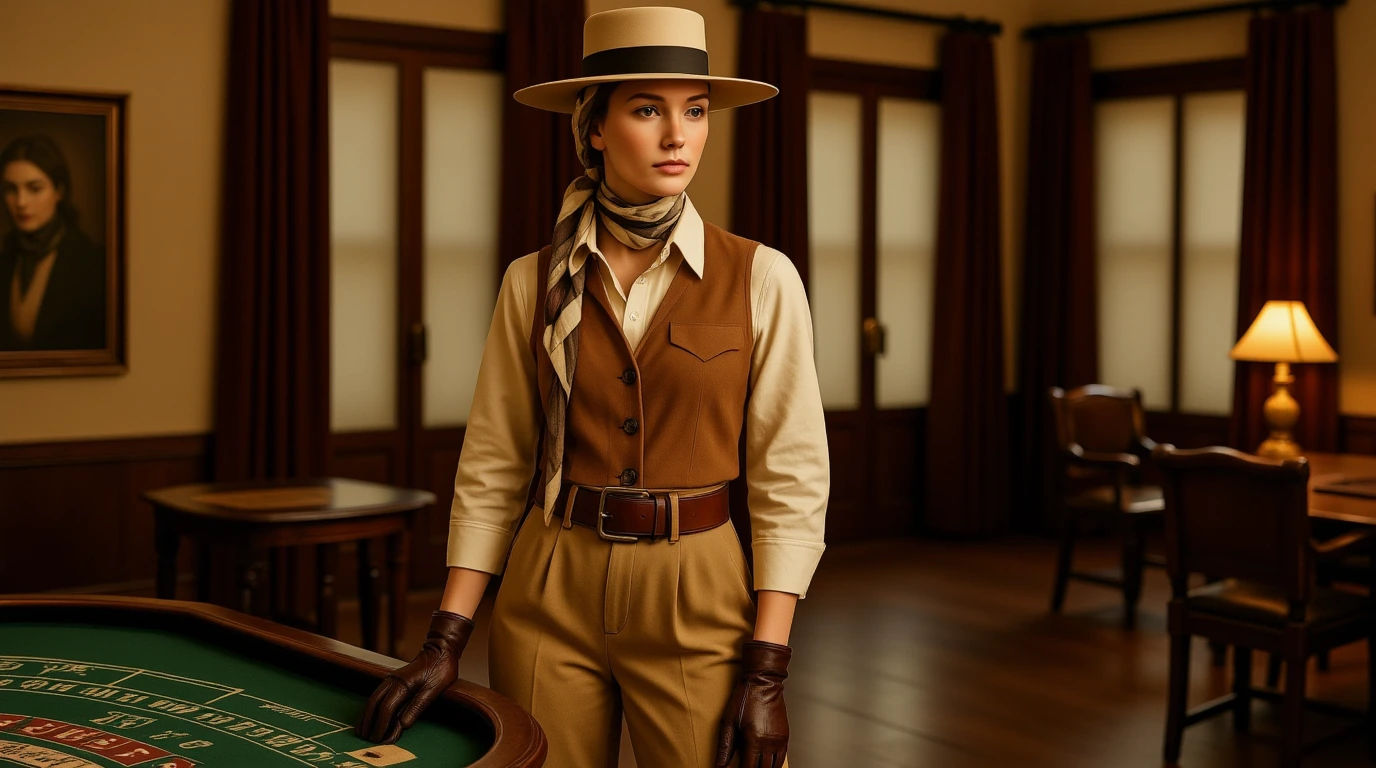
Step back in time to the rugged elegance of the American frontier with these creativly inspired recreations of late 19th-century gambler and saloon patron attire. Inspired by the historic Faro card game photo, we’ve curated four distinct outfits that capture the essence of Western frontier fashion, with practical utility and gentlemanly flair.
Each outfit has been assembled with modern pieces that take cues from the period to creatively reinterpret the frontier aesthetic. Whether you’re planning a themed event, putting together a historical costume, or simply appreciate the timeless appeal of desert Southwestern wear, these carefully selected ensembles create western frontier style.
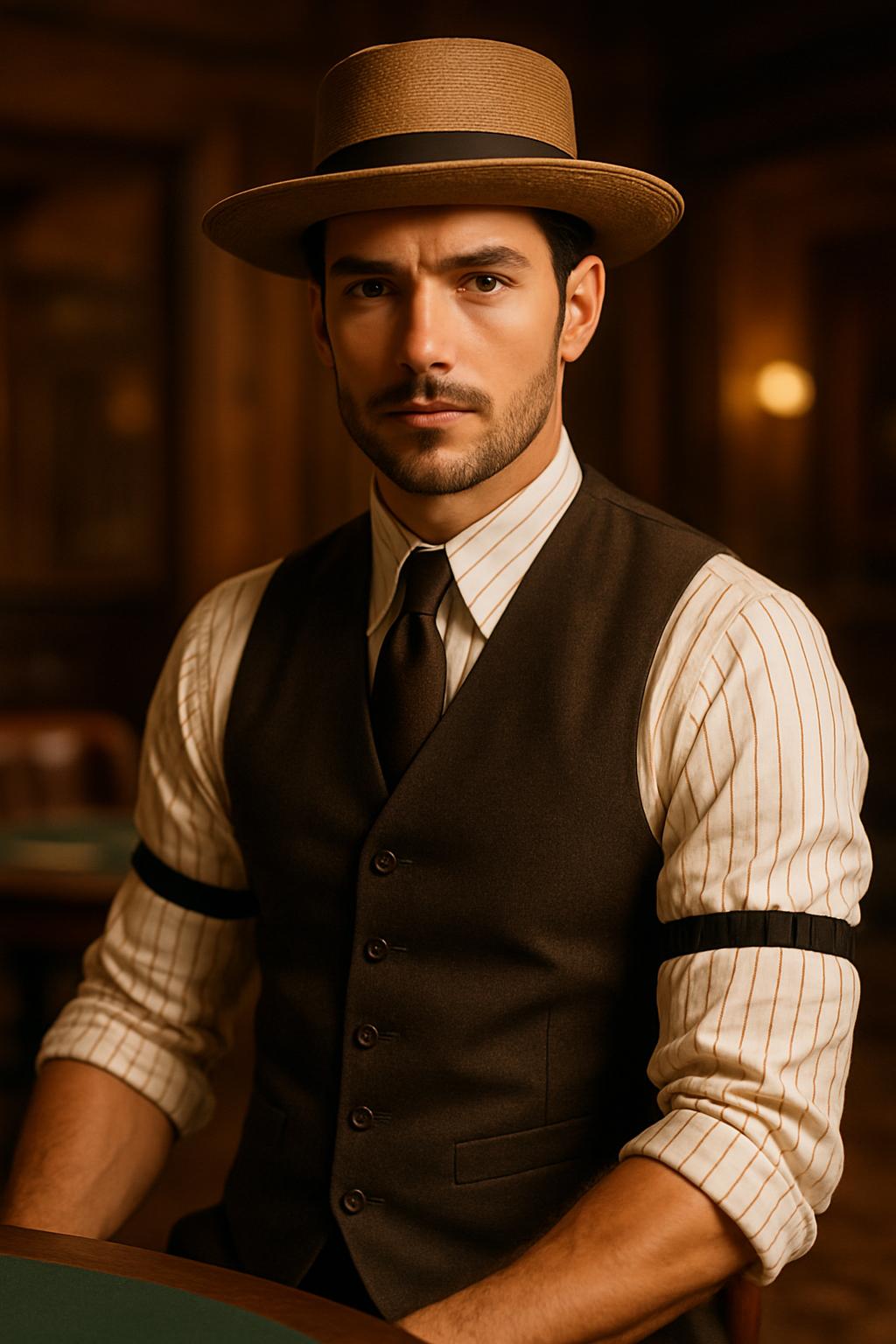
Outfit 1 – The Gambler in Stripes
This outfit is inspired by the look of the gambler seated in the left foreground of the historic photo. With his distinctive striped shirt and practical rugged appearance, this character embodies the working professional gambler of the frontier era—a man who makes his living at the card table and maintains a rugged, utilitarian appearance. Here’s the desert Southwest frontier gambler outfit, with a dash of creative reinterpretation:
Detail: Roll up your sleeves slightly to show you’re ready for a serious game of cards.
Accessorize Wisely: Add a simple pocket watch or a leather cord necklace for subtle period authenticity.
Footwear: Complete the look with distressed leather boots in a medium to dark brown shade.
Color Coordination: The rust and cream striped shirt pairs perfectly with the dark espresso vest, creating a rich, earthy palette typical of frontier attire.
Outfit 2 – The Elder Gambler
This distinguished ensemble is inspired by the look of the older gentleman seated second from the left in the historic photo. With his formal vest, watch chain, and high-crowned hat, he represents the old-timer with classic Western formality—a man who has seen the frontier evolve and maintains a more traditional, dignified appearance.
Vest Placement: Wear the vest fully buttoned except for the bottom button—a timeless gentleman’s rule.
Watch Chain Display: Loop the watch chain across the vest with the pocket watch tucked into the small pocket.
Hat Positioning: Wear the high-crowned hat straight and level for a dignified appearance.
Outfit 3 – The Saloon Patron
This casual ensemble is inspired by the outfit of the man seated in the center of the historic photo. With his chambray work shirt and relaxed posture, he represents the everyday desert Southwest frontier man who might join a game at the Saloon after a day’s work—comfortable, practical, and unpretentious in his approach to both cards and attire.
Shirt Styling: Leave the top button undone and tuck the shirt in loosely for that relaxed, end-of-workday look.
Hat Wear: Position the hat slightly tilted back for a casual, approachable appearance.
Footwear: Pair with worn work boots that show signs of use for authenticity.
🎲 Outfit 4 – The Dealer
This refined outfit is inspired by the look of the man on the right side of the historic photo. With his pinstriped shirt and distinctive arm garters, he embodies the professional Faro dealer—slightly more refined than the players, with practical elements that facilitate his role managing the game.
Arm Garters: Place the sleeve garters mid-bicep to keep shirt sleeves at the perfect length for dealing cards.
Shirt Presentation: Keep the shirt crisp and fully buttoned with a straight collar for a professional appearance.
Hat Position: Wear the flat-brimmed hat level and straight to convey authority.
Historical Context: The Faro Card Game
Faro was the most popular gambling game in frontier America throughout the 19th century, surpassing poker in many saloons and gambling halls. The game featured a dealer (or “banker”) who would play against multiple players simultaneously. With relatively simple rules and favorable odds compared to other games of chance, Faro attracted players from all walks of frontier life.
The distinctive layout seen in the historic photograph—with the dealing box, betting board, and arrangement of players around the table—was typical of Faro games throughout the American West. The varied attire of the participants reflects the social diversity of frontier gambling establishments, where working men, professional gamblers, and town gentlemen might all gather around the same table.
By wearing these frontier gambler inspired outfits, you’re connecting with a fascinating chapter of desert Southwest history—a time when Faro and later Poker games brought together all these characters of the Western frontier.
All product links are affiliate links. We earn a commission on qualifying purchases.
Over time, I’ve come to realize that what I instinctively practice isn’t just basic interior decorating, digital design, or fashion design—it’s something deeper, known as “genius loci”: the Latin term for the spirit of place. When I move somewhere new, I’m drawn to its unique history and aesthetics—whether delving into Old Town Alexandria’s colonial fruit garlands or admiring the southwestern adobes adorned with luminarias. I’m always seeking what makes each location beautiful, warm, and authentically human.
This approach means uncovering the story behind every visual element. It’s about understanding the scaffolding beneath the details—the architectural vernacular and organic building traditions shaped from local materials, climate, and culture across generations. For example, the fruit garlands on Alexandria’s Christmas doors aren’t just decoration; they represent centuries of hospitality and adaptation, merging European customs with American resources and the Mid-Atlantic climate.
Understanding Place-Based Design Through History
Place-based design means listening to a location first—observing how light falls, why certain materials have always been favored, and how cultural memory is coded into architecture. By digging into the “why” behind each choice, you discover the original intentions that made a place compelling, helping you visualize what feels authentic and enduring.
It isn’t about imposing a style; it’s about discovering the warmth of a place’s story and continuing it through curated choices. Some of the most beautiful spaces flow with their environment rather than fighting against it.
AI as a Tool for Visualization
AI is changing how I explore and visualize these place-based design concepts. With AI tools, I can upload photos of weathered bricks or regional motifs and generate multiple interpretations for contemporary interiors, clothing, and beyond.
The quality of AI output has grown rapidly, especially in recent months. For fashion, these tools let me input motifs and regional palettes to visualize designs that reflect a location’s aesthetics in ever greater nuanced detail.
The Creative Process with AI
AI visualization tools are powerful collaborators for exploring place-based design. I can input prompts describing specific regional styles and generate variations that honor original aesthetics while offering fresh takes. AI doesn’t replace the need for understanding; it provides a wealth of visuals that I research, verify, curate, and finetune, guiding the output toward greater authenticity. My research uncovers historical choices—often resulting in a visual dataset or tuned style—which AI helps me reinterpret for everything from interiors to fashion.
Bridging Tradition and Innovation
AI uniquely enables place-based fashion and design—creating pieces that reflect authentic, location-specific aesthetic details. By analyzing color palettes from landscapes, patterns from textiles, or architectural elements, I can use AI to generate concepts that carry those details forward and use them in new ways.
For me, the process isn’t about superficial reproduction but about translating the spirit of a place through modern technology. AI becomes a tool I can tune, to visualize how the genius loci can be embodied in new work. With careful tuning and curation, I can use it to move closer to getting more detailed authenticity in a wider range of visual output, and broaden my creative goals.
My YouTube Channel
My channel is inspired by the genius loci—the authentic spirit—behind fashion, interiors, and architecture, brought to life through AI visualization and research.
I combine research and AI tools (plus plenty of non-AI methods) to visualize historic and modern living spaces and fashion.
It’s about discovering a place’s vernacular and using AI to interpret its beauty for contemporary design-whether I’m generating textile embroidery inspired by regional motifs or visualizing historical elements for modern interiors.
Some styles are more than trends — they’re rooted in place, shaped by history, and carried forward with reverence through the details.
This collection is a visual exploration of fashion inspired by the American Southwest and regions with strong heritage design. I reimagine what it means to dress with intention and utility across time and terrain — pulling from 1890s Tombstone, 1930s Arizona dude ranches, and countryside silhouettes influenced by classic British equestrian wear.
Each outfit tells a layered story. The looks echo Wild West saloons, cowboy and cowgirl style, ranch life, saddlery, and sun-soaked desert resorts — all shaped by utility, elegance, and climate-conscious design. It’s also in the small distinctions: scarves vs. bandanas, neckline shapes, the tilt of a hat, boot silhouettes — subtle details that say so much.
🧵 Threads of Time and Place
Tombstone Saloon 1890s gamblers and frontier tailoring — bold hats, long coats, and dramatic flair.
This project is part of an ongoing exploration of regional style — especially the Desert Southwest — brought to life through careful research, visual design, and AI tools. It’s about honoring real places, real history, and the visual language that shapes them.
📋 Explore More
🗂️ This is just one part of a broader visual archive — spanning blog posts, lookbooks, product collections, and short-form videos across platforms.
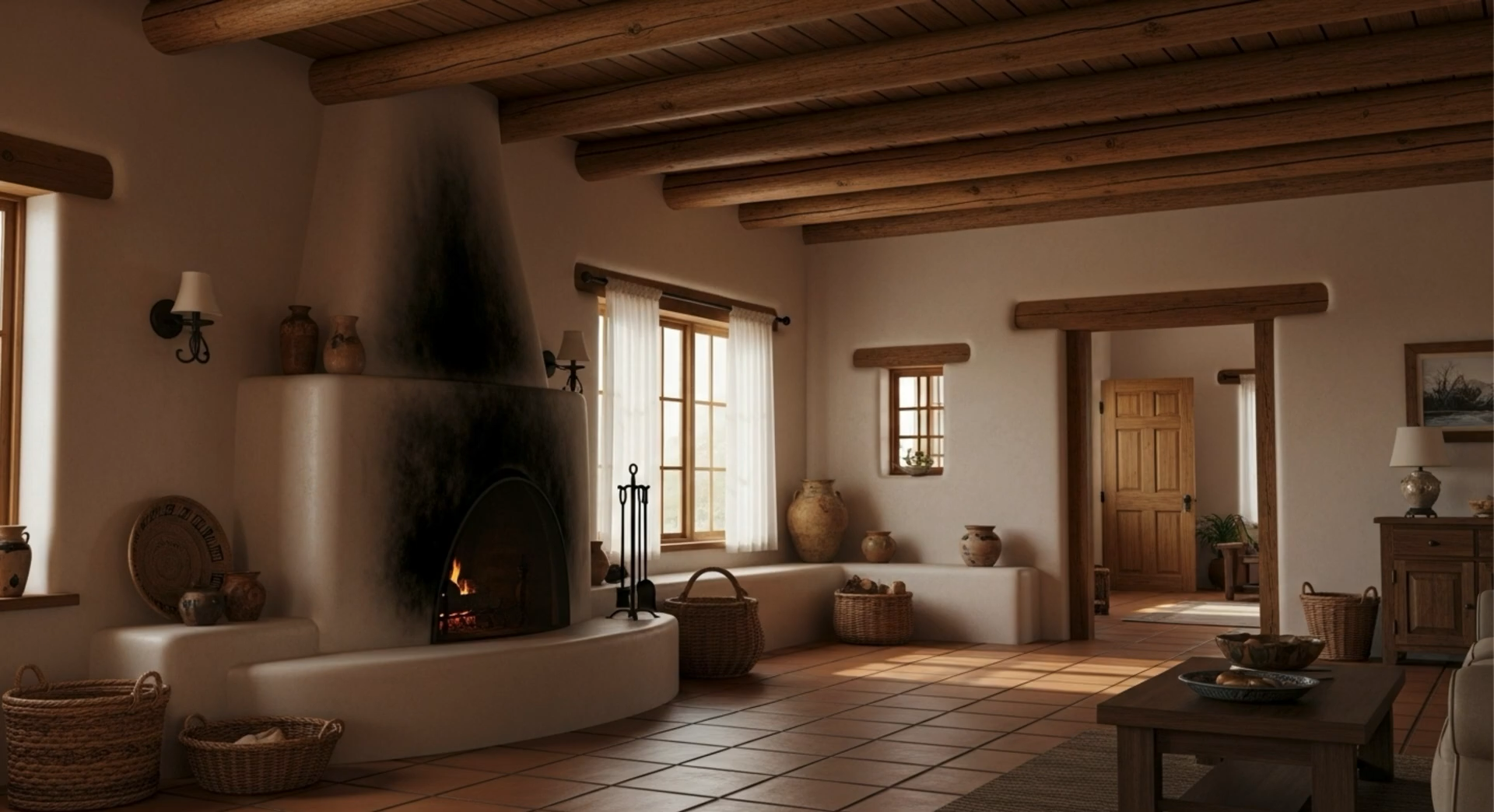
This short video is a visual exploration of Tucson-style interiors — how they’ve evolved over time, and how many elements have remained beautifully unchanged.
From early Sonoran adobe homes with thick hand-formed walls to Territorial-era details and mid-century adaptations, Tucson architecture carries layers of climate-driven design, cultural influence, and lived-in charm.
Thick adobe walls, hand-plastered textures, shady courtyards with bougainvillea spilling over walls, aged wood vigas, classic Southwest tile, kiva style fireplaces – it’s these and other details that make Tucson architecture so inviting.
All visuals were created using AI, based on research, references, and my own curiosity to see what these places might have really looked like.
This is part of my broader exploration of regional design — blending visual storytelling with place-based research.
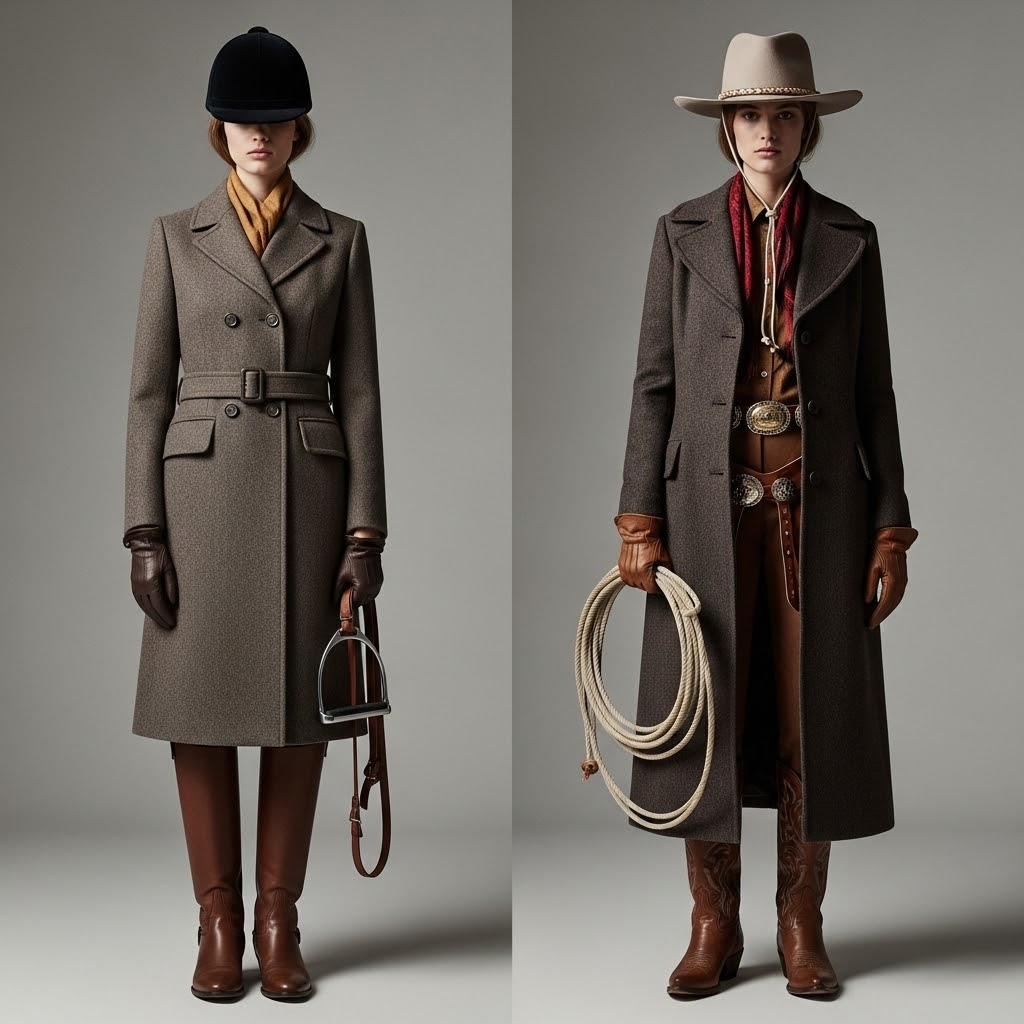
Images: A side by side style comparison. A study of details.
On the left, the woman is wearing an English equestrian-inspired look with a structured wool coat, velvet riding cap, leather gloves, and tall riding boots.
On the right, the look is blended with a Southwestern cowboy-inspired look featuring a similar brown wool double breasted coat, felt cowboy hat with chin cord, black cowboy boots with embroidery, concho belt, and gloves — a blend of tradition, texture, and frontier identity.
This visual comparison explores two heritage-driven styles — one shaped by the misty countryside of England, the other by the dry expanse of the American Southwest. Both looks are rooted in equestrian traditions, tailored layering, and garments built for movement and climate. Yet each speaks a different visual language.
The English equestrian look leans refined and understated: clean lines, structured wool, and polished leather. It’s rooted in formality, tradition, and precision — a style shaped by temperate climates, hunting culture, and riding clubs. Every detail is deliberate: the velvet helmet, the jodhpur boots, the reins coiled just so.
By contrast, the Southwestern cowboy-inspired look draws from ruggedness and myth: dusty brown tones, a wide-brimmed hat, concho details, and clothing made for heat, dust, and long days outdoors. It’s cinematic and regional — shaped by ranch life, early Hollywood cowboy mythos, and desert utility.
The nuanced details between these two outfits demonstrate how similar foundations — equestrian gear, tailored coats, gloves, and boots — can split into entirely different visual vocabularies, depending on geography and history. One is brisk and clipped. The other, wind-worn and expansive.