All the Amazing Things

Tag: southwest

  • Discovering Genius Loci: An Approach to Place-Based Design with AI

    Discovering Genius Loci: An Approach to Place-Based Design with AI

    Over time, I’ve come to realize that what I instinctively practice isn’t just basic interior decorating, digital design, or fashion design—it’s something deeper, known as “genius loci”: the Latin term for the spirit of place. When I move somewhere new, I’m drawn to its unique history and aesthetics—whether delving into Old Town Alexandria’s colonial fruit garlands or admiring the southwestern adobes adorned with luminarias. I’m always seeking what makes each location beautiful, warm, and authentically human.

    This approach means uncovering the story behind every visual element. It’s about understanding the scaffolding beneath the details—the architectural vernacular and organic building traditions shaped from local materials, climate, and culture across generations. For example, the fruit garlands on Alexandria’s Christmas doors aren’t just decoration; they represent centuries of hospitality and adaptation, merging European customs with American resources and the Mid-Atlantic climate.

    Understanding Place-Based Design Through History

    Place-based design means listening to a location first—observing how light falls, why certain materials have always been favored, and how cultural memory is coded into architecture. By digging into the “why” behind each choice, you discover the original intentions that made a place compelling, helping you visualize what feels authentic and enduring.

    It isn’t about imposing a style; it’s about discovering the warmth of a place’s story and continuing it through curated choices. Some of the most beautiful spaces flow with their environment rather than fighting against it.

    AI as a Tool for Visualization

    AI is changing how I explore and visualize these place-based design concepts. With AI tools, I can upload photos of weathered bricks or regional motifs and generate multiple interpretations for contemporary interiors, clothing, and beyond.

    The quality of AI output has grown rapidly, especially in recent months. For fashion, these tools let me input motifs and regional palettes to visualize designs that reflect a location’s aesthetics in ever greater nuanced detail.

    The Creative Process with AI

    AI visualization tools are powerful collaborators for exploring place-based design. I can input prompts describing specific regional styles and generate variations that honor original aesthetics while offering fresh takes. AI doesn’t replace the need for understanding; it provides a wealth of visuals that I research, verify, curate, and finetune, guiding the output toward greater authenticity. My research uncovers historical choices—often resulting in a visual dataset or tuned style—which AI helps me reinterpret for everything from interiors to fashion.

    Bridging Tradition and Innovation

    AI uniquely enables place-based fashion and design—creating pieces that reflect authentic, location-specific aesthetic details. By analyzing color palettes from landscapes, patterns from textiles, or architectural elements, I can use AI to generate concepts that carry those details forward and use them in new ways.

    For me, the process isn’t about superficial reproduction but about translating the spirit of a place through modern technology. AI becomes a tool I can tune, to visualize how the genius loci can be embodied in new work. With careful tuning and curation, I can use it to move closer to getting more detailed authenticity in a wider range of visual output, and broaden my creative goals.

    My YouTube Channel

    My channel is inspired by the genius loci—the authentic spirit—behind fashion, interiors, and architecture, brought to life through AI visualization and research.

    I combine research and AI tools (plus plenty of non-AI methods) to visualize historic and modern living spaces and fashion.

    It’s about discovering a place’s vernacular and using AI to interpret its beauty for contemporary design-whether I’m generating textile embroidery inspired by regional motifs or visualizing historical elements for modern interiors.

  • Visual Details Inspired by a Historic Sonoran Style Adobe

    Visual Details Inspired by a Historic Sonoran Style Adobe

    Compound Entrance

    Adobe compound entrance with traditional Sonoran Desert territorial architecture

    The weathered adobe entrance showcases authentic pre-railroad Tucson territorial architecture with hand-carved wooden doors and traditional vigas extending from thick earthen walls.

    Central Courtyard

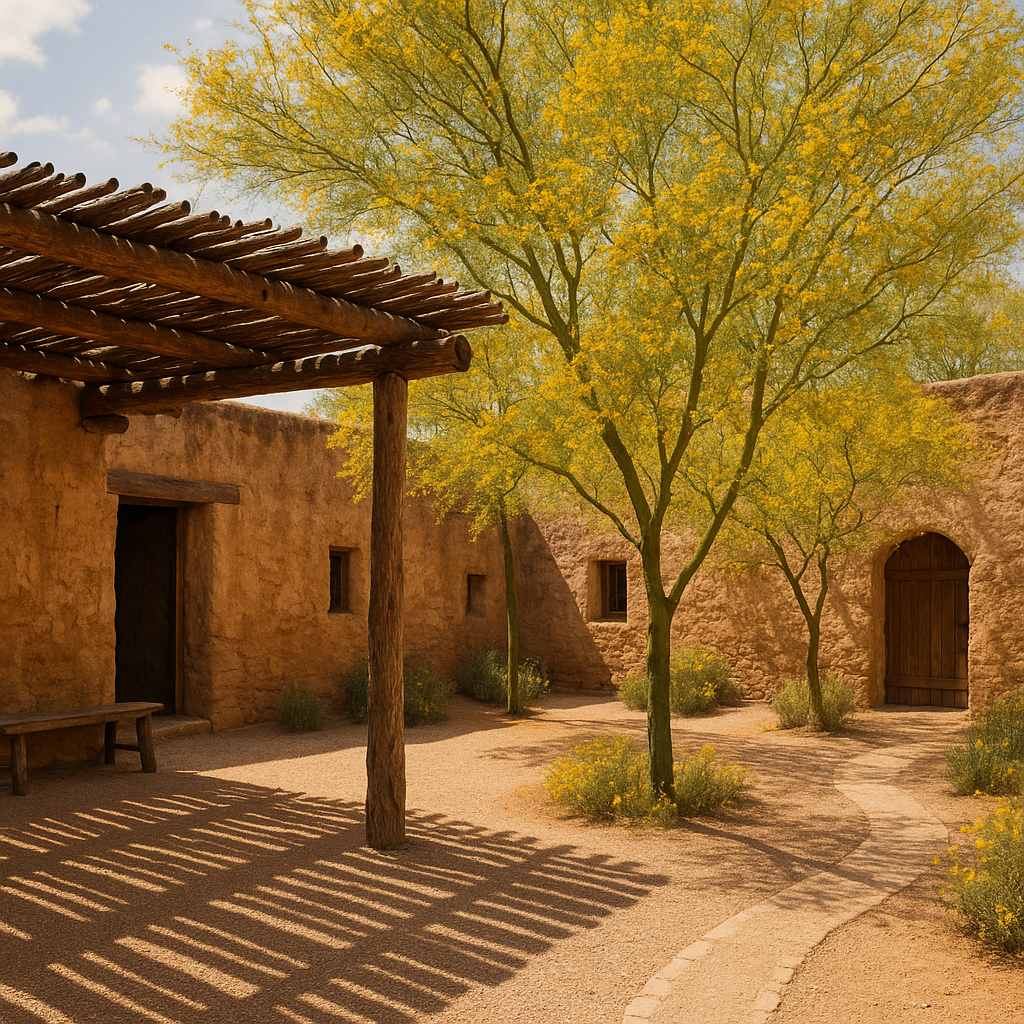
    Traditional central courtyard of Sonoran Desert adobe family compound

    The heart of the compound features a traditional ramada providing shade over the central gathering space, with native palo verde trees and gravel pathways connecting the various family dwellings.

    Main Sala (Living Room)

    Traditional sala interior with exposed vigas and thick adobe walls

    The principal room displays classic Sonoran construction with massive exposed wooden ceiling beams (vigas) supported by thick adobe walls, furnished with period-appropriate simple wooden pieces.

    Kitchen (Cocina)

    Traditional adobe kitchen with corner fireplace and period furnishings

    The working kitchen centers around a corner fireplace and horno (oven), with wooden shelving displaying clay pottery and utilitarian items essential to frontier family life.

    Bedroom (Dormitorio)

    Simple adobe bedroom with traditional Sonoran Desert territorial features

    Private sleeping quarters maintain the compound’s authentic simplicity with exposed vigas, small windows for privacy and climate control, and minimal furnishings typical of the territorial period.

    Compound Overview

    Aerial view of historic Sonoran Desert adobe row house compound occupying full block

    This historic adobe row house compound, visualized through AI and research, demonstrates how extended Sonoran Desert families created interconnected living spaces that occupied entire city blocks, providing both privacy and community within the harsh desert environment of early Tucson.

  • Desert Southwest Inspired Styles That Take Cues from the Past

    Desert Southwest Inspired Styles That Take Cues from the Past

    Watch on YouTube: https://youtu.be/ok3TxzUhBkU

    Some styles are more than trends — they’re rooted in place, shaped by history, and carried forward with reverence through the details.

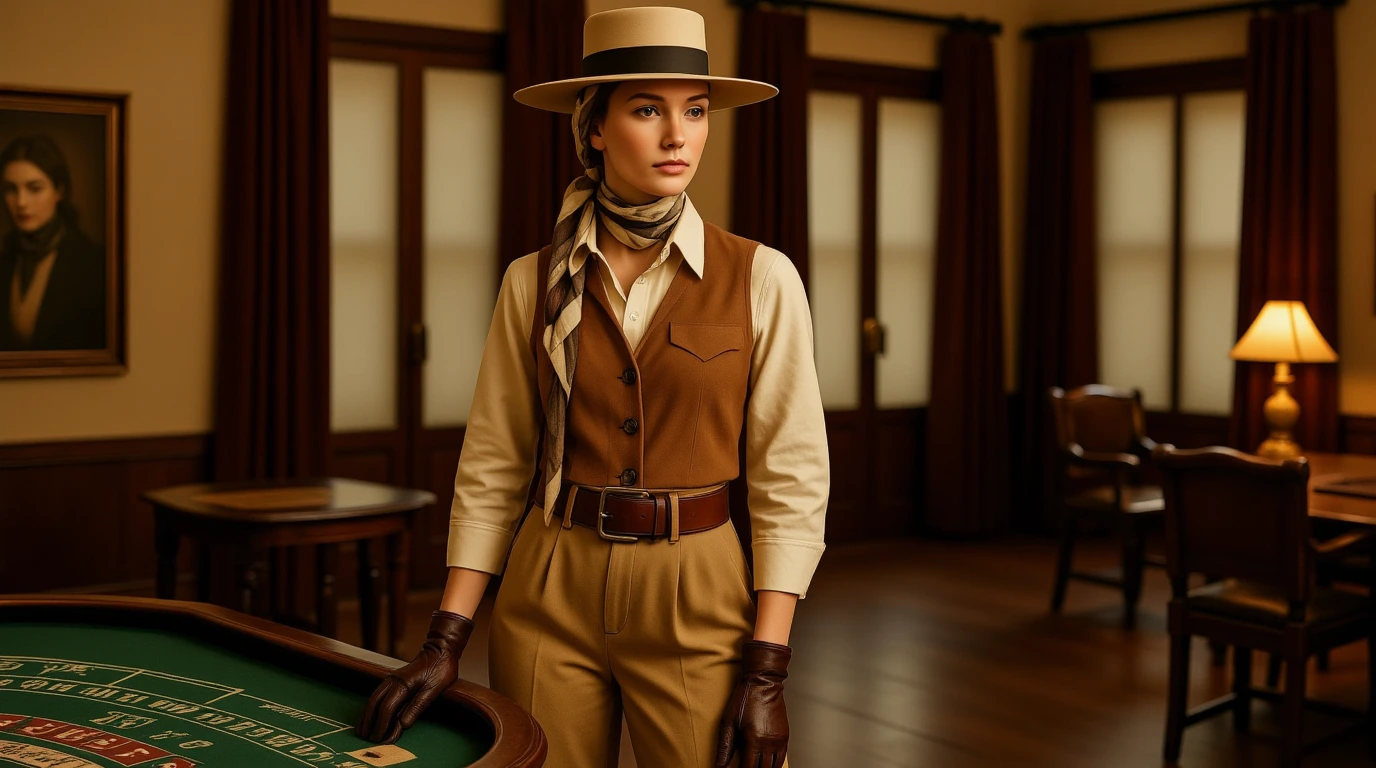
    This collection is a visual exploration of fashion inspired by the American Southwest and regions with strong heritage design. I reimagine what it means to dress with intention and utility across time and terrain — pulling from 1890s Tombstone, 1930s Arizona dude ranches, and countryside silhouettes influenced by classic British equestrian wear.

    Each outfit tells a layered story. The looks echo Wild West saloons, cowboy and cowgirl style, ranch life, saddlery, and sun-soaked desert resorts — all shaped by utility, elegance, and climate-conscious design. It’s also in the small distinctions: scarves vs. bandanas, neckline shapes, the tilt of a hat, boot silhouettes — subtle details that say so much.


    🧵 Threads of Time and Place

    Tombstone Saloon
    1890s gamblers and frontier tailoring — bold hats, long coats, and dramatic flair.

    Arizona Dude Ranch
    1930s dude ranch meets early Hollywood’s romanticized cowboy frontier — riding gear meets resort style.

    English Countryside Influence
    Waxed coats, double-breasted wool layers, and equestrian lines — reinterpreted for Southwestern terrain.


    🌵 Layers of Desert Style

    • Shaped by climate extremes: sun, heat, chill
    • Rooted in frontier history and desert adaptation
    • Vintage Americana meets lived-in practicality
    • Natural fibers, airy silhouettes, sun protection
    • Earth tones, saddle-worn leather, handcrafted accents

    This is style shaped by setting — defined by climate, landscape, and regional traditions.


    ✨ See the Looks


    This project is part of an ongoing exploration of regional style — especially the Desert Southwest — brought to life through careful research, visual design, and AI tools. It’s about honoring real places, real history, and the visual language that shapes them.


    📋 Explore More

    🗂️ This is just one part of a broader visual archive — spanning blog posts, lookbooks, product collections, and short-form videos across platforms.


    📖 Start here: https://alltheamazingthings.wordpress.com


    🎞️ Visit the YouTube channel: youtube.com/@alltheamazingthingsedit


    Thank you for reading and exploring with me — these visuals are part of an ongoing study in style, shaped by place, time, and design.